



Information

Populate the side area with widgets, images, and more. Easily add social icons linking to your social media pages and make sure that they are always just one click away.

Foundation Receives STAR Award from OSilas Gallery

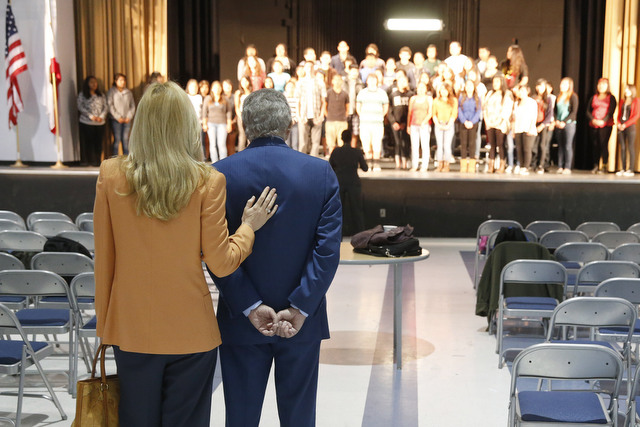
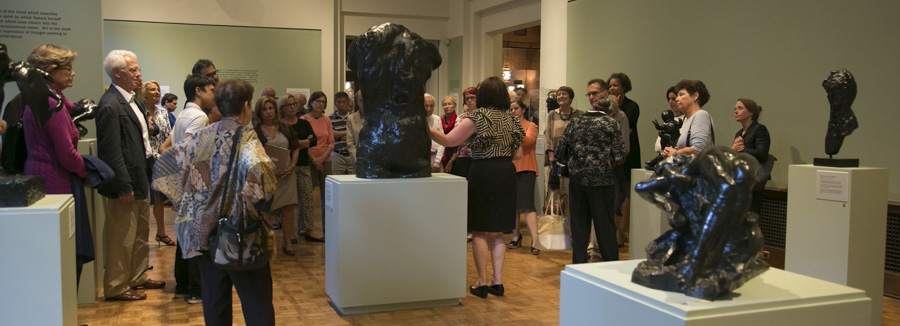
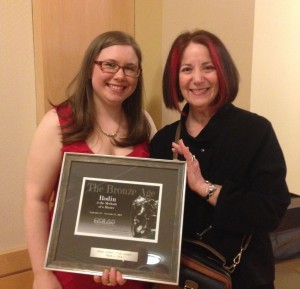
[gallery columns="2" ids="1271,1269"] On March 1st, Concordia College's OSilas Gallery presented its first annual STAR Award to the Iris & B. Gerald Cantor Foundation.  Judith Sobol, Executive Director of the Foundation, accepted the Award at the Gallery's annual Gala.  The Star Award recognizes organizations that have shown a strong commitment to the arts and have supported the OSilas Gallery in achieving its mission:  to integrate the visual arts into the cultural and educational life of the campus and community by providing quality exhibitions and programs that are diverse in style, content, and media; memorable, thought-provoking, and spiritually enriching; and of artistic originality, integrity, and excellence. The Cantor Foundation loaned an important group of Rodin portraits to OSilas in the fall of 2013 and the Gallery created a lively exhibition around it.  Its show, The Bronze Age, included demonstrations of artists modeling portraits and of bronze casting, as well as a trip to Philadelphia...

Iris Cantor and Rodin’s “Danaid”

In the September-October 2013 issue of Fine Art Connoisseur magazine, essayist and poet David Masello asked art collectors about the details in paintings and sculpture they find intriguing.  Iris Cantor, President and Chairman of the Cantor Foundation, replied with an explanation of what she loves in Rodin's Danaid: Some of Rodin’s greatest gifts that set him apart from his contemporaries were his storytelling ability, and his break from his conservative colleagues’ traditional poses. These established Rodin’s reputation in France and then the world. One of my favorite examples is Danaïd. I was first attracted to the sculpture by the woman’s beautifully expressive and sensual back. Then I researched and uncovered the story behind the piece. I was surprised and shocked by the terribly tragic Greek myth. The daughters of King Danaus murdered their husbands on their wedding night and were damned to collect water in broken urns that could never be filled,...

Iris Cantor-UCLA Women’s Health Center Has Busy Winter

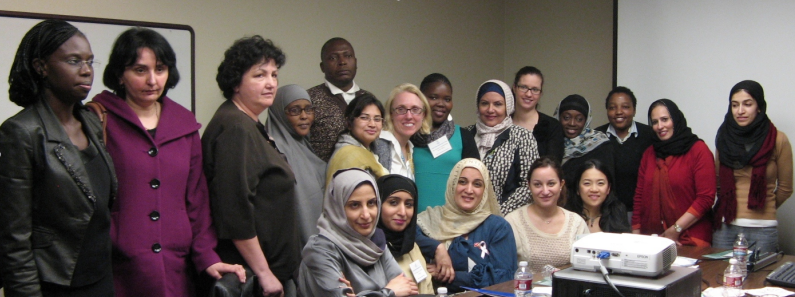
In March the Iris Cantor-UCLA Women's Health Center and its Women's Health Education and Resource Center hosted a delegation of international women's health care professionals; 19 nations were represented.  Sponsored by the U.S. Department of State, the delegation discussed international cooperation on the common challenges facing the global community in preventing, treating, and managing health problems affecting women.  Members of the delegation met with Dr. Janet Pregler, Director of the Iris Cantor-UCLA Women's Health Center, and with Julie Friedman, Director of the Health Education and Resource Center. [caption id="attachment_1240" align="aligncenter" width="477"] At the January 27th conference on reproductive health and the environment: (back row, left to right) Janette Robinson-Flint, Executive Director, Black Women for Wellness; Kristin Palmsten, Postdoctoral Scholar, Department of Pediatrics, University of California San Diego; Ellen Eidem, Director, Office of Women's Health, Los Angeles County Department of Public Health; Martha Dina Arguello, Executive Director, Physicians for Social Responsibility-Los Angeles;...

Exploring the Arts Expands Its Reach

Since 2001 the Cantor Foundation has provided substantial support for Exploring the Arts, a New York City-based organization founded by Tony Bennett and his wife, Susan Benedetto, who is president of the organization's Board.  Recently the first exciting expansion of ETA's geographic realm of activity has occurred and now three East Los Angeles high schools have been added to those New York schools that ETA supports.  This support takes the form of both funding and expertise, and it enables the public schools to include the arts in their curricula in a big way. On a recent broadcast NBC Nightly News joined Susan and Tony on their recent visit to ETA's three new Partner Schools in East L.A.  Take a look (past the opening commercial): Visit NBCNews.com for breaking news, world news, and news about the economy...

Spotlight on “Mask of Hanako, Type D”

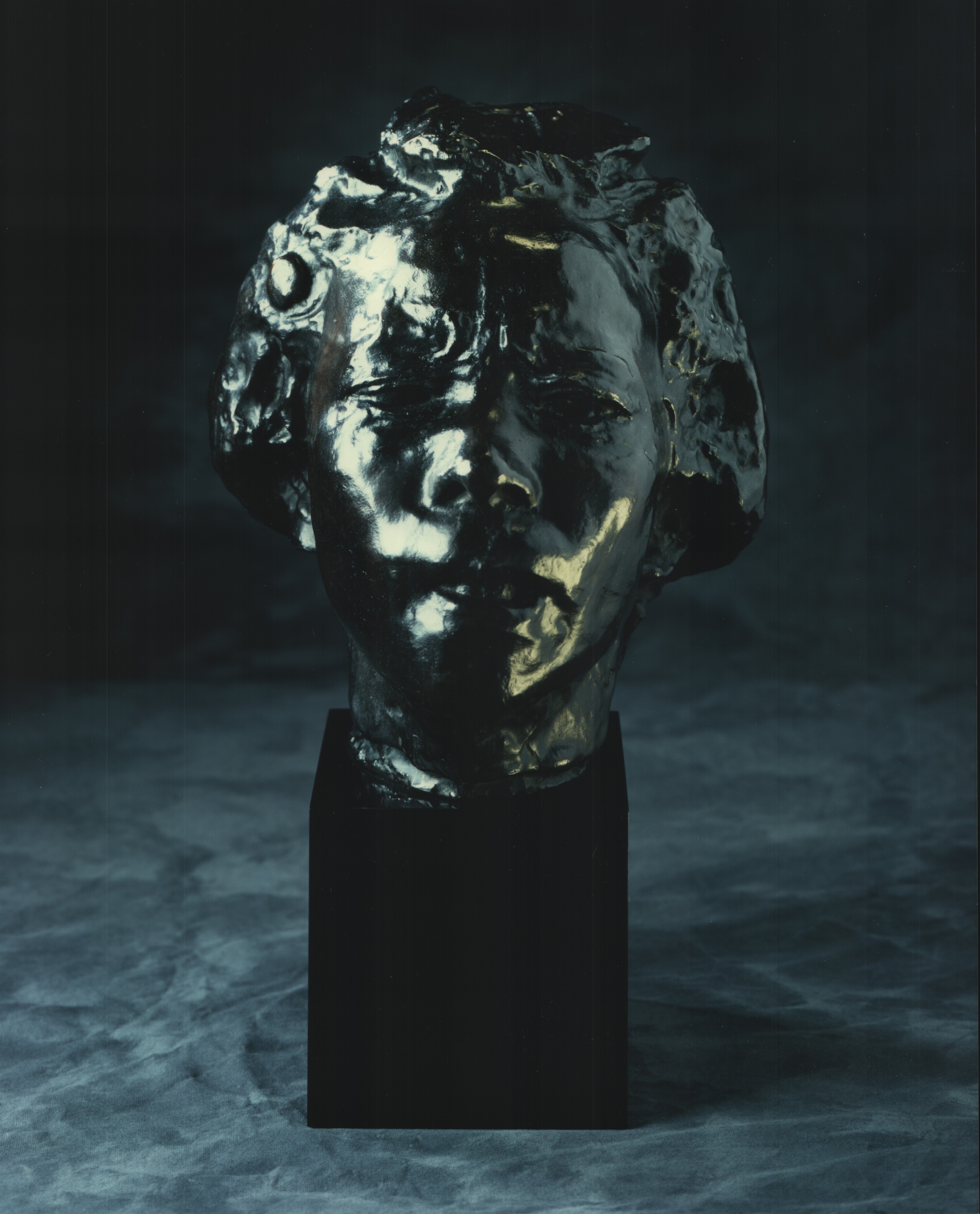
Whereas his contemporary Degas was interested in dancers as subject-matter, Rodin was interested in dancers for what they taught him about how the body worked and moved.  In 1906, in Marseilles to study the Royal Cambodian dancers, he met the Japanese dancer and actress Ohta Hisa (1868-1945), who had been nicknamed "Hanako" ("Little Flower") by another dancer, the American Loïe Fuller. Hanako was renowned for her astounding coordination and her ability to hold a difficult position.  She posed for Rodin beginning in February 1907 and he made at least 53 heads plus several drawings of her.  According to Professor Albert Elsen, Mask of Hanako, Type D was first titled by Rodin Mask of the Anguish of Death. It possibly was inspired by a death scene the sculptor saw her perform. Rodin's friend and biographer Judith Cladel described one of Hanako's sittings: "Hanako did not pose like other people.  Her features were contracted in...

Foundation’s Successful Rodin Exhibitions Resume with Shows at Penn and Concordia

Following a few years’ hiatus to plan continuing traveling exhibitions, at the beginning of September two new Rodin exhibitions organized by the Cantor Foundation opened.  The first, a selection of Rodin’s portraits, fills the OSilis Gallery at Concordia College in Bronxville, New York.  The second, at the Arthur Ross Gallery at the University of Pennsylvania in Philadelphia, features the variety of Rodin’s figurative work. The Ross Gallery exhibition, curated by its director Lynn Marsden-Atlass and Cantor Foundation Director Judith Sobol, opened on September 6 and closes on December 22.  The Gallery, easy to find on Penn’s beautiful campus, is distinguished by Gothic Revival windows that would have pleased Rodin, who likened Gothic architecture to the essence of nature. Entitled “Rodin:  The Human Experience,” the Ross Gallery show provides insight into Rodin’s fascination with how an inert material like bronze could convey human life in all its aspects.  The sculptures attest to the...

Cantor Business Center a Vital Part of DeWitt Clinton High School

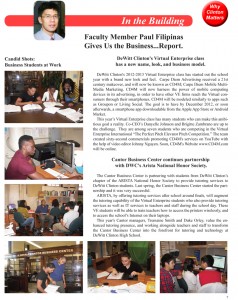
In 2006 the Iris & B. Gerald Cantor Foundation made a substantial gift to DeWitt Clinton High School to create the B. Gerald Cantor Business Center in the Bronx school's Library.   Bernie Cantor was a 1934 graduate of Clinton.  The Business Center, named in his honor, opened in 2010 and is dedicated to providing students with state of the art facilities for the study of business and finance. Here, a recent newsletter from Clinton tells of the Cantor Business Center's partnership with the ARISTA National Honor Society to provide tutoring services to Clinton students.  ...

Spotlight on “Danaid”

  Some of Rodin’s greatest gifts that set him apart from his contemporaries were his storytelling ability, and his break from his conservative colleagues’ traditional poses. These established Rodin’s reputation in France and then the world. One of my favorite examples is Danaïd. I was first attracted to the sculpture by the woman’s beautifully expressive and sensual back. Then I researched and uncovered the story behind the piece. I was surprised and shocked by the terribly tragic Greek myth. The daughters of King Danaus murdered their husbands on their wedding night and were damned to collect water in broken urns that could never be filled, for eternity. Rodin exposed the woman’s torture and agony throughout the sculpture, proving that he could make a back as meaningful and passionate as a face. As you walk around the work, the shifting light on the surface gives movement to the grieving woman, and her...

Stanford Students Scrub Rodin’s Gates of Hell

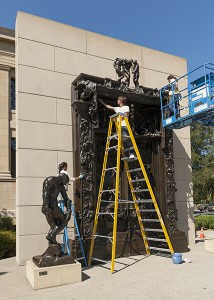
(Stanford University recently sent us this article by Robin Wander from Stanford News) Somebody has got to keep the Gates of Hell safe from the elements. Meet the students on Stanford's outdoor sculpture preservation crew. They conduct preventative maintenance on Rodin's Gates of Hell and 100 other outdoor sculptures across campus. In other words, they get lots of hands-on-the-art experience because they have permission to touch. Given the nature of their work, which combines art and science, it's no surprise that the crew, led by Elizabeth Saetta, is an extension of the Cantor Arts Center's Art+Science Learning Lab, run by Susan Roberts-Manganelli. Saetta points out in a post on the Cantor blog Cross-Sections that conservation of art, including outdoor sculpture, involves specific training in not only art, but also chemistry and materials science. Past technicians have in fact included students studying art history, chemistry and materials science, as well as bio-engineering, philosophy, English, mathematics and studio art. The crew trains with Saetta by learning...

Spotlight on “Adam with Pillar”

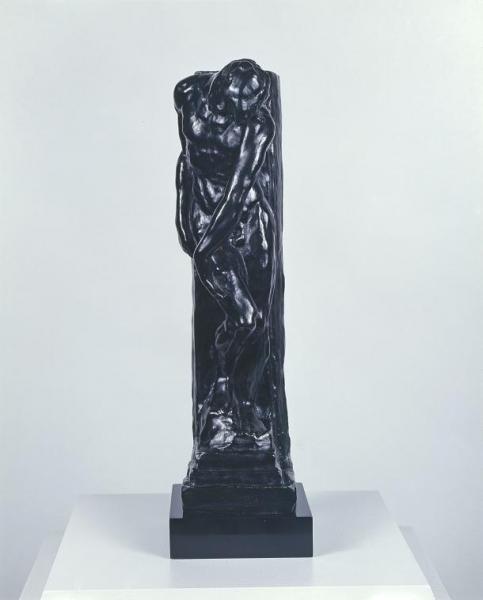
This 16-inch tall Adam with Pillar is a wonderful example of Rodin's interest in Michelangelo and of the french artist's own genius with the communicative capacity of sculptural form. In 1876 Rodin was living in Brussels, working on decorative sculpture for architecture. He traveled to Italy to study the work of Michelangelo, the only artist he ever acknowledged as being of interest to him. Perhaps that same year, after his return from Italy, Rodin created his own Adam (the figure without pillar), drawing heavily on Michelangelo's pietas and on his paintings for the Sistine Chapel. Rodin's Adam was set aside until a few years later when Rodin decided he wanted an Adam and an Eve to flank his Gates of Hell. Rodin's 1876 Adam is being created by God as we watch: he is awakening to conscious being, pulling and twisting himself out of his prior nothingness, pointing to the ground from whence he came. It is therefore no surprise that this piece was first...