Information
Populate the side area with widgets, images, and more. Easily add social icons linking to your social media pages and make sure that they are always just one click away.





“It’s an amazing sense of satisfaction to know you have helped not only individuals but humankind at large. You leave your mark on something – you hope it inspires others.”
–Iris Cantor, Chairman, Iris & B. Gerald Cantor Foundation
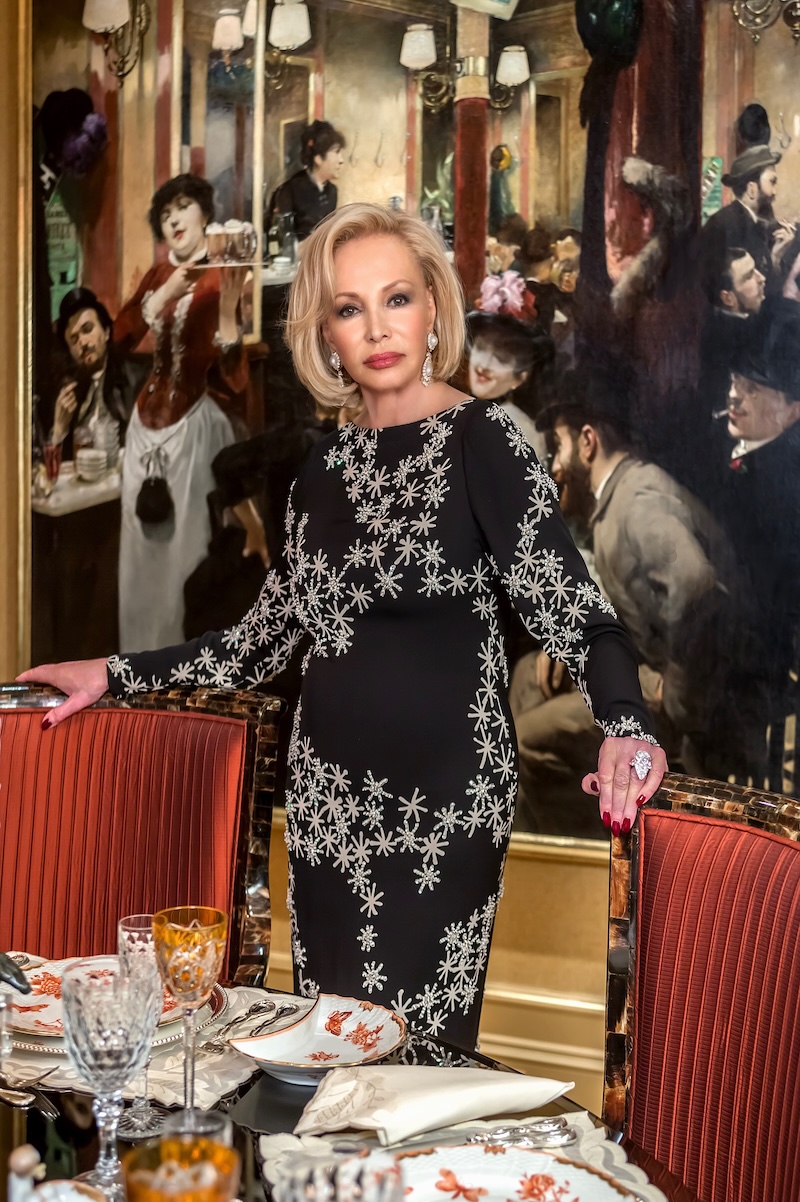 With the passing of Iris Cantor on 2/22/26, the Iris & B. Gerald Cantor Foundation has lost its ardent champion and guiding inspiration. Through her leadership, tenacity and generosity over the course of six decades, Mrs. Cantor made an undeniable mark in two vital spheres of human enterprise, bringing her trademark passion and commitment to amplify public appreciation of the visual and performing arts and redefine standards in medical care and research.
Iris Cantor was always a trailblazer. A native of Brooklyn, New York, she launched her career by joining a brokerage firm on Wall Street— then an avenue few women pursued. Through her professional activities she met her future husband, B. Gerald Cantor, founder of the securities brokerage Cantor Fitzgerald, Inc. The originator of screen brokerage, a technology that revolutionized the trading of U.S. government securities, Bernie Cantor had another passion: the art of Auguste Rodin (1840-1917). He assembled the world’s largest and most important private collection of works by the great French sculptor and dedicated himself to sharing these masterpieces with the public. Iris Cantor — herself an arts devotee whose love of painting and sculpture formed in childhood visits to the Brooklyn Museum — was an enthusiastic partner in her husband’s “magnificent obsession.” The Cantors collaborated in organizing exhibitions, promoting scholarship on Rodin and donating artworks to universities and museums around the world.
The couple established the Iris & B. Gerald Cantor Foundation in 1978 to fund medical, educational and cultural institutions and programs in the United States and abroad. In the ensuing years, the Foundation has sent dozens of traveling exhibitions of the Cantors’ beloved Rodin sculpture to cultural institutions throughout the United States and abroad, reaching at least 12 million people. Landmark gifts of sculpture have established or augmented Rodin collections at institutions including the Brooklyn Museum, College of the Holy Cross, the Los Angeles County Museum of Art, The Metropolitan Museum of Art, the North Carolina Museum of Art and Stanford University. Another significant beneficiary is the Musée Rodin in France, where Mrs. Cantor was inspired to executive-produce the nationally acclaimed and award winning film documenting the first lost-wax casting of Rodin’s monumental work, The Gates of Hell.
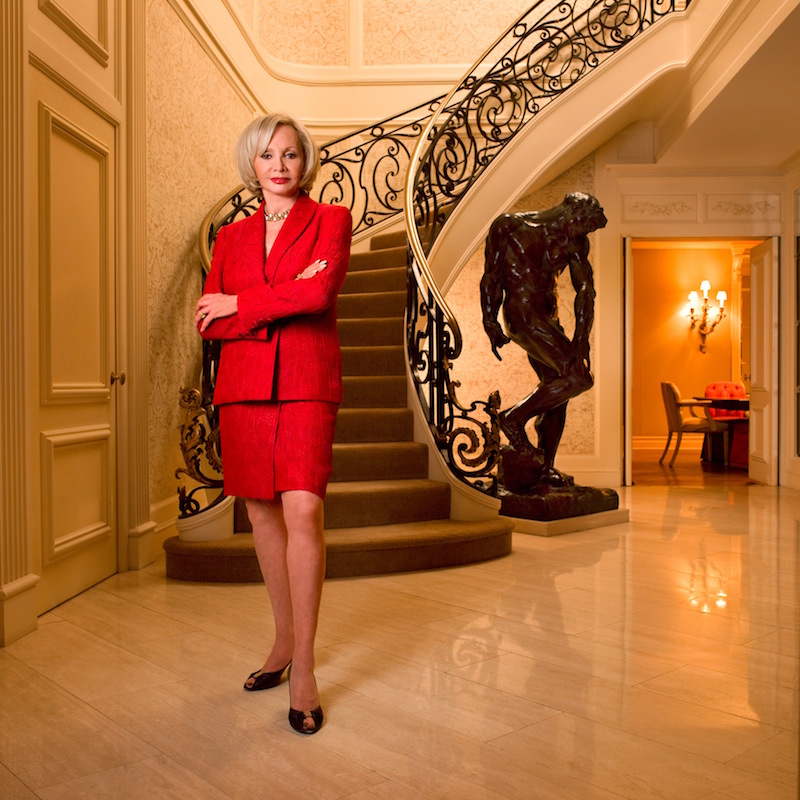 Many of these institutions have honored in perpetuity the transformative impacts of the Cantors’ personal generosity and that of their Foundation. At the Metropolitan Museum of Art, where a young Bernie Cantor first encountered a work by Rodin (the sculptor’s marble rendering of The Hand of God), visitors are familiar with several indoor and outdoor exhibit spaces bearing the Cantor name. Stanford University has added the Iris and B. Gerald Cantor Commons to complement the Cantor Arts Center and adjacent sculpture garden. The Brooklyn Museum recently dedicated the Iris Cantor Plaza, a reimagined open space conceived as an inspiring gateway between the surrounding community and the Museum. An expanded sculpture garden will soon open at the Los Angeles County Museum of Art, the first museum where sculptures from the Cantor collection were exhibited for the public. And the Tisch School of the Arts at New York University, home to the Cantor Film Center, now boasts the Iris Cantor Theatre, NYU’s first proscenium-level performance stage.
Across the Atlantic, the Cantors’ longstanding friendship with the Musée Rodin came full circle with the renovation of the Hôtel Biron, now reflecting the artist’s own vision for his former Paris studio. The Musée’s premier gallery was named “Hall Iris et B. Gerald Cantor,” a distinction rarely accorded by a French museum. “The long love story between the Cantors and the Musée Rodin is one of the beautiful stories we love to tell at the museum,” noted Director Amélie Simier.
After Bernie Cantor’s death in 1996, Iris embraced the role of guardian of the Cantor legacy. Characteristically, she was far more than a caretaker, working tirelessly to strengthen and expand the Foundation’s reach.
“Our conservative estimate is that every year, half of all visitors to The Metropolitan Museum of Art experience the Iris & B. Gerald Cantor Foundation’s generosity,” commented Director Emeritus Philippe de Montebello. The Met’s current Director and CEO, Max Hollein, said, “Iris’s vision is woven into the very fabric of the Museum. Her generosity has created spaces that invite bold thinking, creativity and joy.”
 At the Brooklyn Museum, Director Anne Pasternak described Mrs. Cantor’s relationship with the institution as “grounded in a lasting affection for the borough where her story began. Growing up in Brooklyn and visiting the Brooklyn Museum was a formative and treasured experience—one that instilled in her a belief that great art should be accessible to all.”
Veronica Roberts, the John and Jill Freidenrich Director of the Cantor Arts Center at Stanford University, noted that Iris Cantor’s “philanthropic vision and stewardship of the legacy of Auguste Rodin has made a deep and indelible impression” at Stanford, where “the Rodin collection remains one of the crown jewels of the museum and an enduring sense of wonder and inspiration for the public.” And at College of the Holy Cross, President Vincent D. Rogenu lauded Mrs. Cantor as a driving force in making Holy Cross the only college museum in Central Massachusetts, where the Cantors’ gifts of sculpture “provide daily inspiration and connect our community to artistic excellence of the highest caliber.”
The Cantor legacy in healthcare is as comprehensive as that in the arts, and certain to be equally enduring. Finding ways to improve and ultimately customize and personalize healthcare was long a focal point for Mrs. Cantor. The loss of her younger sister to breast cancer was a galvanizing event, and she became a leading advocate of routine screening mammograms. In 1986 she established the Iris Cantor Center for Breast Imaging at UCLA under the direction of world-renowned radiologist Dr. Lawrence Bassett. The center was a pioneer in providing a compassionate setting designed to reduce the trepidation associated with breast cancer screening. Reflecting Mrs. Cantor’s vision, the Center continues to be a strong voice in communicating the lifesaving benefits of early detection through mammography.
Another turning point came when Mrs. Cantor learned that medical students were being taught to diagnose and treat female patients by thinking of them as male patients, only smaller — as “a 70-kilogram man,” according to the conventional wisdom. Recognizing that change was imperative, she enlisted the help of top physicians who shared her vision for addressing the gender disparity in both research and care.
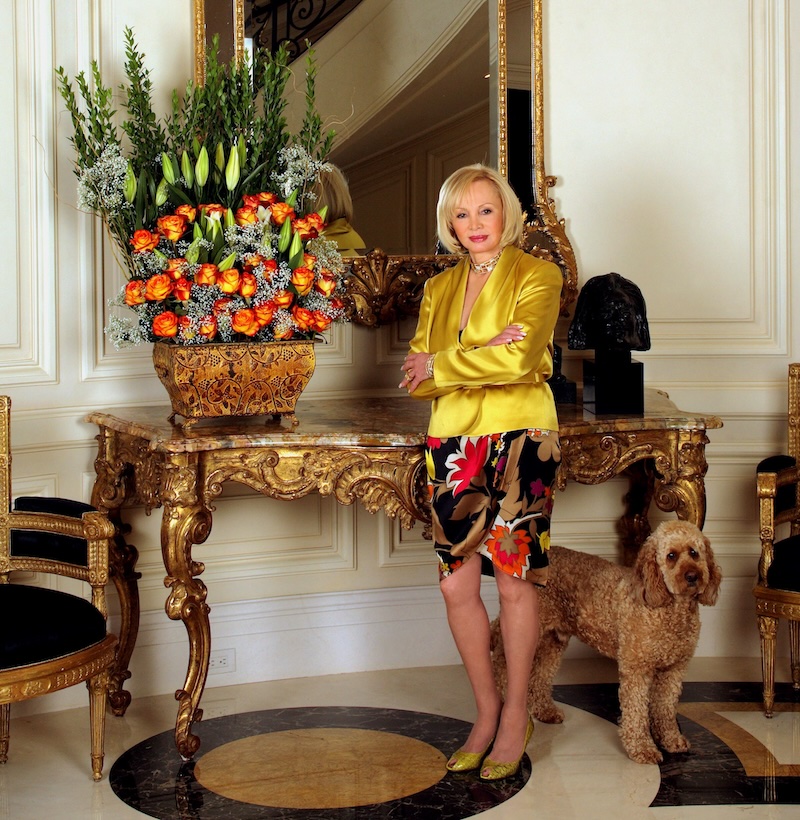 That vision became reality with the 1995 establishment of the Iris Cantor-UCLA Women’s Health Center. It pioneered a holistic approach, offering diagnosis, treatment and patient education under one roof. The overwhelming success of this “one-stop shopping” concept inspired the Iris Cantor Women’s Health Center at New York-Presbyterian Hospital/Weill Cornell Medical Center, which opened in 2002 and is one of the world’s most comprehensive medical facilities for women. Within a decade, 40 percent of the patients at the center were men — seeking the same high-quality care enjoyed by the women in their lives. Responding to the clear need for a counterpart facility for men at New York-Presbyterian, in 2012 Mrs. Cantor created the Iris Cantor Men’s Health Center, the first of its kind in the New York region.
True to their namesake, the three Cantor Health Centers continually innovate and reinforce their position at the vanguard thanks to ongoing support from the Cantor Foundation and active leadership boards. For example, at its 30th anniversary celebration in 2025, the UCLA Center announced a new Cantor Foundation commitment in support of the Women’s Initiative for Scientific Health, which expands on the Center’s highly successful seed grants program to expedite research in women’s health.
The Iris Cantor Health Centers embody the perspective that Mrs. Cantor was among the first, not merely to espouse, but to actively propel toward a new healthcare model: that women and men have different and unique medical needs and respond best to targeted care. In addition, all three facilities endorse Mrs. Cantor’s belief in treating the whole person and placing emphasis on preventive measures and healthy lifestyles. Consistent with this belief, her gift to the Andrew Weil Center for Integrative Medicine at the University of Arizona enabled construction of the Iris Cantor Building, one of three structures comprising the new complex.
In a joint statement, the New York-Presbyterian Board of Trustees lauded Mrs. Cantor, a Life Trustee, as “one of the earliest and most influential philanthropic voices calling for advancing medical research and improving care for all.” Said Dr. Janet Pregler, director of the Iris Cantor-UCLA Women’s Health Center, “Iris Cantor’s sustained advocacy has shaped comprehensive healthcare for tens of thousands of women.”
Mrs. Cantor received many accolades for her philanthropic leadership, innovation and patronage. She held honorary doctorates in fine arts from College of the Holy Cross and Laguna College of Art+Design, as well as an honorary fine arts degree from Brooklyn’s Pratt Institute and UCLA’s highest honor, The UCLA Medal. The National Medal of Arts was bestowed upon Iris alongside Bernie Cantor by President Bill Clinton in 1995. Iris was named a Chevalier in the French National Order of the Legion of Honor in 2000 for her work in promoting women’s healthcare as well as Rodin, and then elevated her to Officier in 2017. In 2008 she received the Big Apple Award from the Tisch School of the Arts at NYU. New York-Presbyterian Hospital named her its Trustee of the Year in 2003 and honored her at its 2015 Annual Gala. She received the New York Weill Cornell Council Leadership Award in 2018.
In Mrs. Cantor’s words, “When you leave your mark on something, you hope it inspires others to do the same. And that is the greatest satisfaction of all.” We celebrate the life of the incomparable Iris Cantor — pathbreaking philanthropist, role model and visionary — who indeed left her mark while inspiring countless others. The Cantor legacy, embedded in the Foundation’s mission and echoed in its work, will live on, to the lasting betterment of our society.